A Guide to Diamond Color
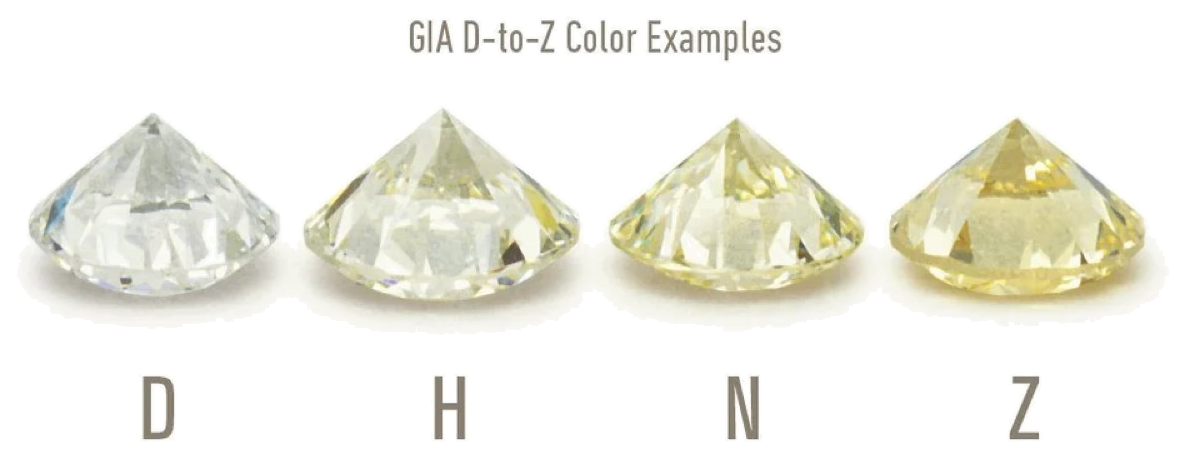
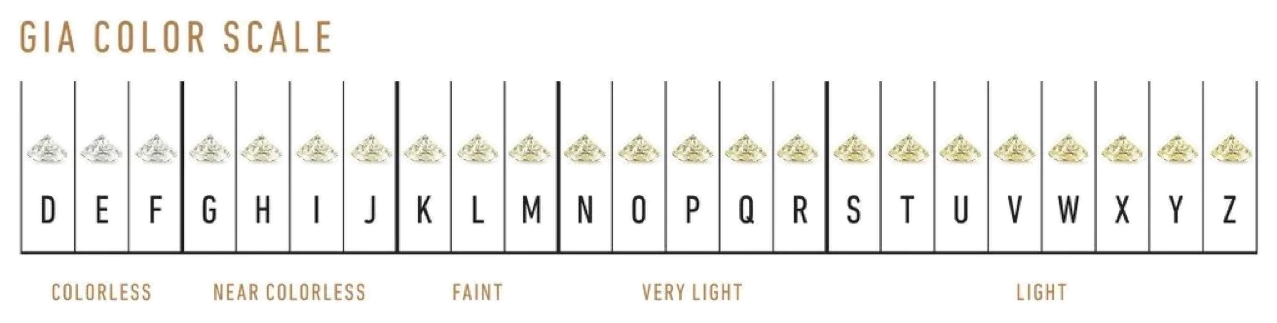
When evaluating a white diamond, color is the absence of it. GIA grades that absence from D to Z — table-down, against masterstones, in controlled light. Face-up in a ring, D through F are the same conversation.
The GIA color grades
D–F
Colorless
No visible color. Graded table-down against masterstones in controlled light. The difference between D and F is a laboratory distinction — not a face-up one in a finished ring.
G–J
Near colorless
Looks white when set. G–H is where most of our clients land. I–J take yellow or rose gold beautifully, and cost less for the same size and cut.
K–M
Faint
Warmth you can see, especially above a carat. Not a defect — a temperature. We use it when the metal and the skin tone want it.
N–R
Very light
Color is part of the stone’s character. Rarely what someone means when they say they want a white diamond.
S–Z
Light
Obvious body color. Past Z, GIA grades diamonds as fancy yellow, brown, or another hue — a different (and often more valuable) conversation.
Platinum and white gold show color. Yellow and rose gold hide it. Most of the rings we make live in G–H for white metal, I–J for yellow. Past Z, GIA grades fancy color — a different book.
Colorless · D
Absolutely colorless. The rarest white. Visible only beside a masterstone, table-down.
Touch a grade to hold